FocusOn Neurology
  • Gastrointestinal Resource Center
  • Inflammatory Bowel Disease
  • NASH Resource Center
  • Highlights from DDW 2025
  • Highlights from ACG 2025 - Focus on Ulcerative Colitis
  • Highlights from ACG 2026 - Focus on Ulcerative Colitis
  • Highlights from ACG 2025 - Focus on Metabolic Dysfunction–Associated Steatohepatitis (MASH)
  • Highlights from ACG 2026 - Focus on Metabolic Dysfunction–Associated Steatohepatitis (MASH)
  • Primary Biliary Cholangitis Knowledge Hub
  • C. difficile & Microbiome Therapeutics Knowledge Hub
  • Highlights from DDW 2026
  • Gastrointestinal Resource Center
  • Inflammatory Bowel Disease
  • NASH Resource Center
  • Highlights from DDW 2025
  • Highlights from ACG 2025 - Focus on Ulcerative Colitis
  • Highlights from ACG 2026 - Focus on Ulcerative Colitis
  • Highlights from ACG 2025 - Focus on Metabolic Dysfunction–Associated Steatohepatitis (MASH)
  • Highlights from ACG 2026 - Focus on Metabolic Dysfunction–Associated Steatohepatitis (MASH)
  • Primary Biliary Cholangitis Knowledge Hub
  • C. difficile & Microbiome Therapeutics Knowledge Hub
  • Highlights from DDW 2026

Advanced Search

Advanced Search

  • Featured:
  • Highlights from ACG 2026 - Focus on Ulcerative Colitis
  • Highlights from ACG 2026 - Focus on Metabolic Dysfunction–Associated Steatohepatitis (MASH)

Gut power for better health: microbial therapeutics

January 2026
Share:
Back to C. difficile & Microbiome Therapeutics Knowledge Hub Peer-reviewed articles

Read Full Article

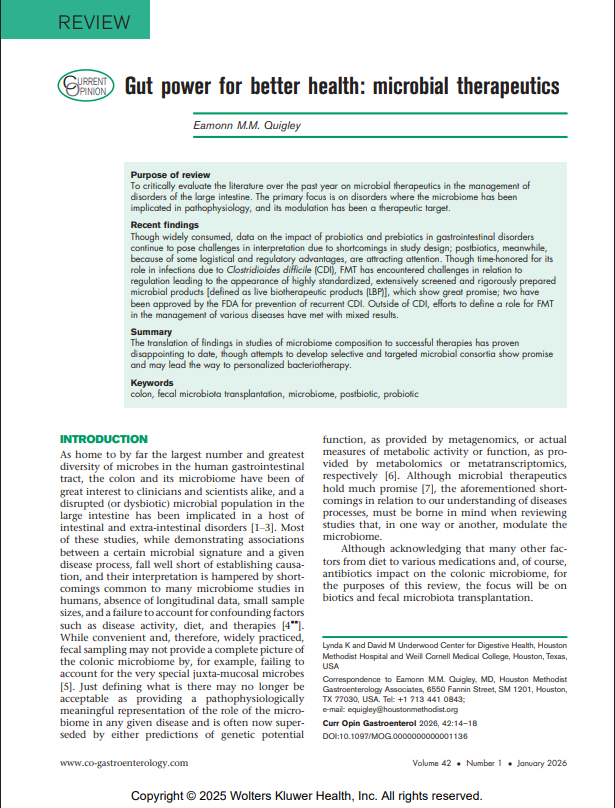
Purpose of review 

To critically evaluate the literature over the past year on microbial therapeutics in the management of disorders of the large intestine. The primary focus is on disorders where the microbiome has been implicated in pathophysiology, and its modulation has been a therapeutic target.

Recent findings 

Though widely consumed, data on the impact of probiotics and prebiotics in gastrointestinal disorders continue to pose challenges in interpretation due to shortcomings in study design; postbiotics, meanwhile, because of some logistical and regulatory advantages, are attracting attention. Though time-honored for its role in infections due to Clostridioides difficile (CDI), FMT has encountered challenges in relation to regulation leading to the appearance of highly standardized, extensively screened and rigorously prepared microbial products [defined as live biotherapeutic products (LBP)], which show great promise; two have been approved by the FDA for prevention of recurrent CDI. Outside of CDI, efforts to define a role for FMT in the management of various diseases have met with mixed results.

Summary 

The translation of findings in studies of microbiome composition to successful therapies has proven disappointing to date, though attempts to develop selective and targeted microbial consortia show promise and may lead the way to personalized bacteriotherapy.

Share

Modal body text goes here.

FocusOn logo
  • Articles
  • Multimedia
  • Blog
  • Resources
  • About FocusOn
  • Privacy Policy
  • Terms of Use

© 2026 Wolters Kluwer. All right reserved.