FocusOn Neurology
  • Gastrointestinal Resource Center
  • Highlights from ACG2024 - Focus on Ulcerative Colitis
  • Highlights from ACG2024 - Focus On Fatty Liver Disease
  • Inflammatory Bowel Disease
  • NASH Resource Center
  • Highlights from DDW 2025
  • Highlights from ACG 2025 - Focus on Ulcerative Colitis
  • Highlights from ACG 2025 - Focus on Metabolic Dysfunction–Associated Steatohepatitis (MASH)
  • Primary Biliary Cholangitis Knowledge Hub
  • C. difficile & Microbiome Therapeutics Knowledge Hub
  • Gastrointestinal Resource Center
  • Highlights from ACG2024 - Focus on Ulcerative Colitis
  • Highlights from ACG2024 - Focus On Fatty Liver Disease
  • Inflammatory Bowel Disease
  • NASH Resource Center
  • Highlights from DDW 2025
  • Highlights from ACG 2025 - Focus on Ulcerative Colitis
  • Highlights from ACG 2025 - Focus on Metabolic Dysfunction–Associated Steatohepatitis (MASH)
  • Primary Biliary Cholangitis Knowledge Hub
  • C. difficile & Microbiome Therapeutics Knowledge Hub

Advanced Search

Advanced Search

  • Featured:
  • Primary Biliary Cholangitis Knowledge Hub
  • C. difficile & Microbiome Therapeutics Knowledge Hub

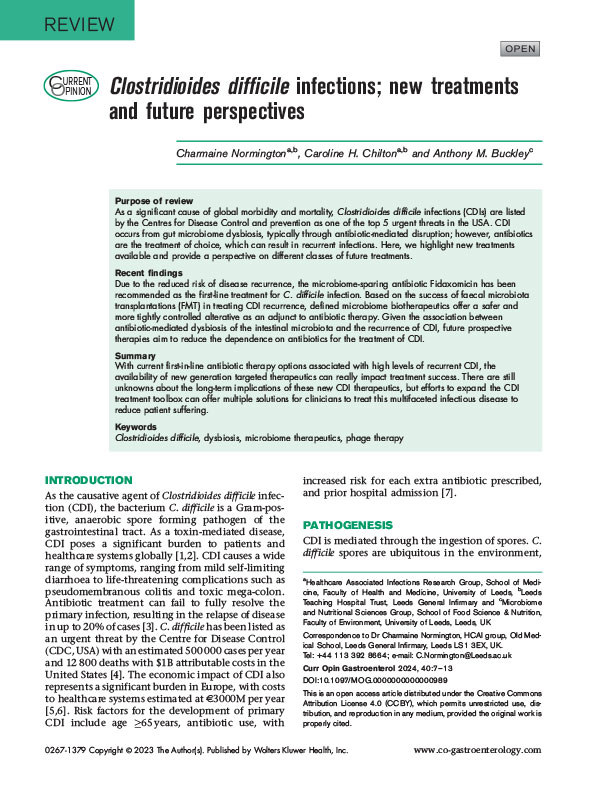
Clostridioides difficile infections; new treatments and future perspectives

January 2024
Share:
Back to C. difficile & Microbiome Therapeutics Knowledge Hub Peer-reviewed articles

Read Full Article

Purpose of review

As a significant cause of global morbidity and mortality, Clostridioides difficile infections (CDIs) are listed by the Centres for Disease Control and prevention as one of the top 5 urgent threats in the USA. CDI occurs from gut microbiome dysbiosis, typically through antibiotic-mediated disruption; however, antibiotics are the treatment of choice, which can result in recurrent infections. Here, we highlight new treatments available and provide a perspective on different classes of future treatments.

Recent findings

Due to the reduced risk of disease recurrence, the microbiome-sparing antibiotic Fidaxomicin has been recommended as the first-line treatment for C. difficile infection. Based on the success of faecal microbiota transplantations (FMT) in treating CDI recurrence, defined microbiome biotherapeutics offer a safer and more tightly controlled alterative as an adjunct to antibiotic therapy. Given the association between antibiotic-mediated dysbiosis of the intestinal microbiota and the recurrence of CDI, future prospective therapies aim to reduce the dependence on antibiotics for the treatment of CDI.

Summary

With current first-in-line antibiotic therapy options associated with high levels of recurrent CDI, the availability of new generation targeted therapeutics can really impact treatment success. There are still unknowns about the long-term implications of these new CDI therapeutics, but efforts to expand the CDI treatment toolbox can offer multiple solutions for clinicians to treat this multifaceted infectious disease to reduce patient suffering.

Share

Modal body text goes here.

FocusOn logo
  • Articles
  • Multimedia
  • Blog
  • Resources
  • About FocusOn
  • Privacy Policy
  • Terms of Use

© 2026 Wolters Kluwer. All right reserved.

Your Privacy

To give you the best possible experience we use cookies and similar technologies. We use data collected through these technologies for various purposes, including to enhance website functionality, remember your preferences, show the most relevant content, and show the most useful ads. You can select your preferences by clicking the link. For more information, please review our Privacy and Cookie Policy.

|
|

Cookie Policy

Information about our use of cookies

Wolters Kluwer ("we" or "us") wants to inform you about the ways we process your personal information. In this Privacy & Cookie Notice we explain what personal information we collect, use and disclose.

Personal information means any data relating to an individual who can be identified, directly or indirectly, based on that information. This may include information such as names, contact details, (online) identification data, online identifiers, or other characteristics specific to that individual.

Read More